The settings menu was reorganised in Draftable Legal 26.6. If you are on 26.6 or later, follow the “26.6 and later” tabs below. On earlier versions, follow “Before 26.6”. To check your version, open Settings. The version number shows at the bottom-left (for example, v26.6.0).
Note regarding Machine Wide MSI installation for Draftable Legal and iManage integration
It is recommended that if are planning to use the Machine Wide MSI installer for your Draftable Legal installation, we highly recommend that you use the default install location if you also plan to integrate with iManage to reduce the likelihood of any issues during the integration process.Stopping the browser prompt. Once the compare actions are working, browsers ask users for confirmation each time before opening Draftable Legal. This can be pre-approved centrally so the prompt never appears, including for the iManage Work Panel in Outlook, which needs its own setting. See Allowing Draftable to launch from your browser and the iManage Work Panel.
iManage Cloud configuration
The iManage cloud configuration requires access to both Draftable Legal and an administrator-level(with access to control center) account for configuring Draftable within iManage.
Configuring Draftable Legal
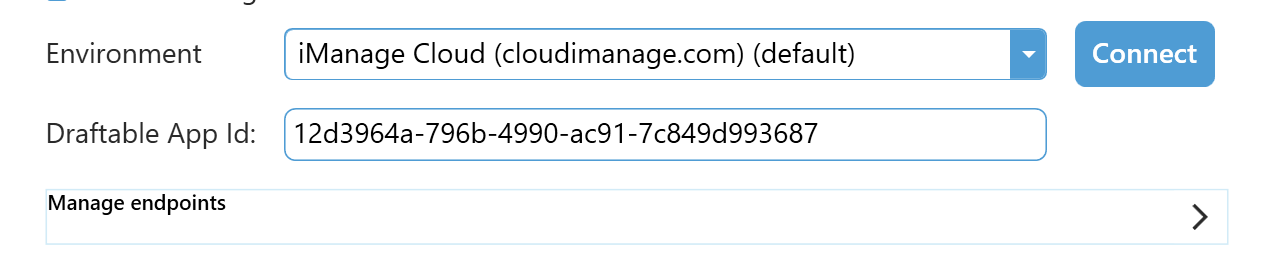
Ensure you have logged into iManage on your Draftable Legal application. This depends on what version of Draftable you are using. If you are using Draftable version 25.9.300 or earlier, please follow the process below.1
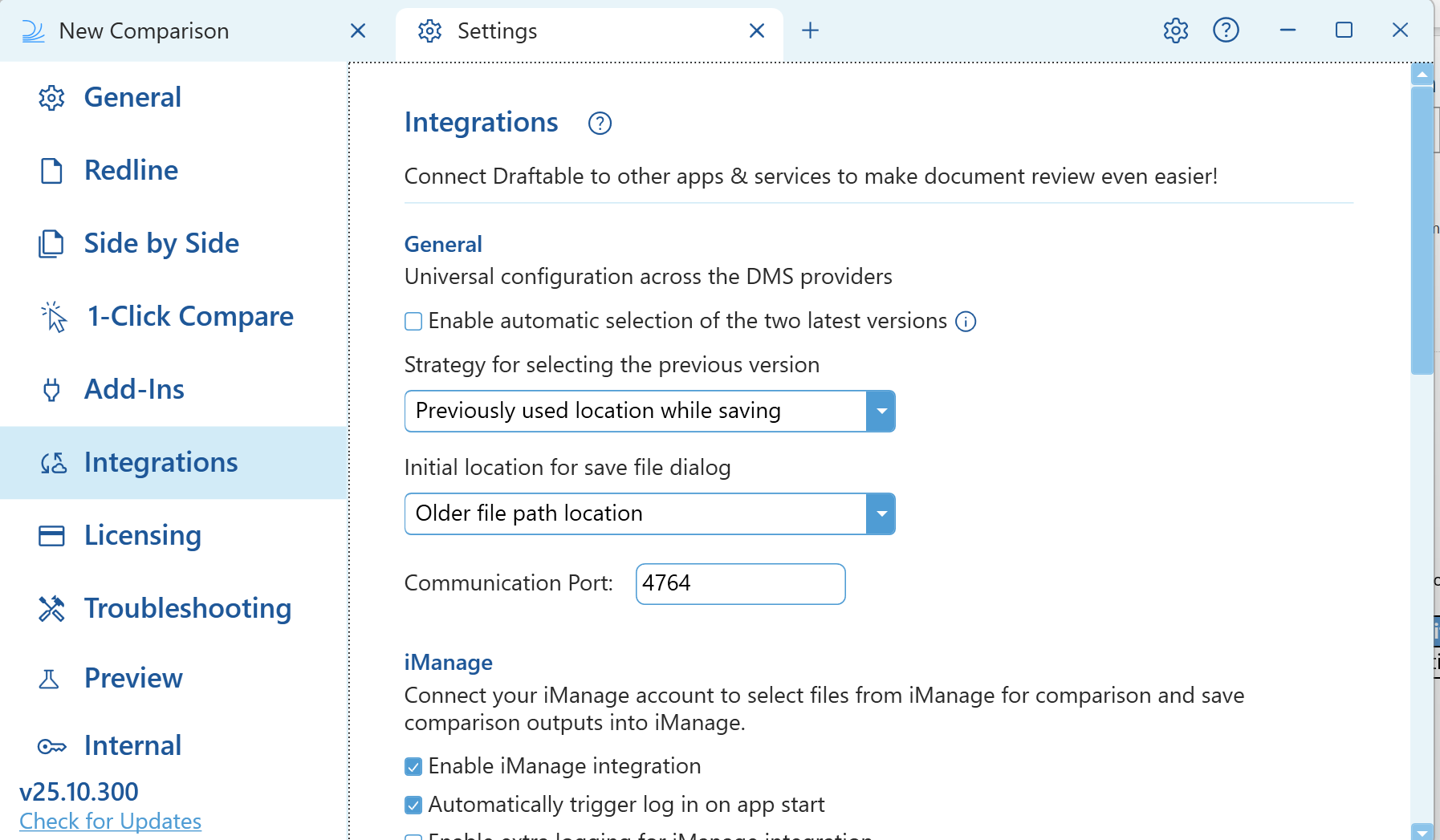
Open the settings menu and navigate to the integrations section of the settings.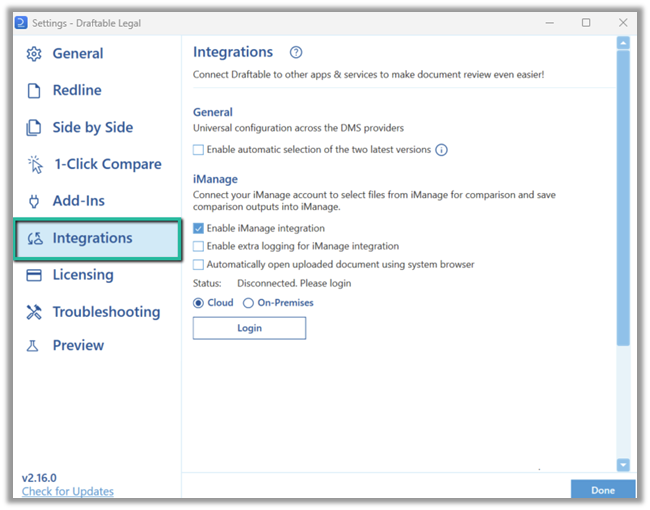
2
Click the Login button, enter your credentials for your iManage account. It should display as Connected as with your correct account details if done correctly.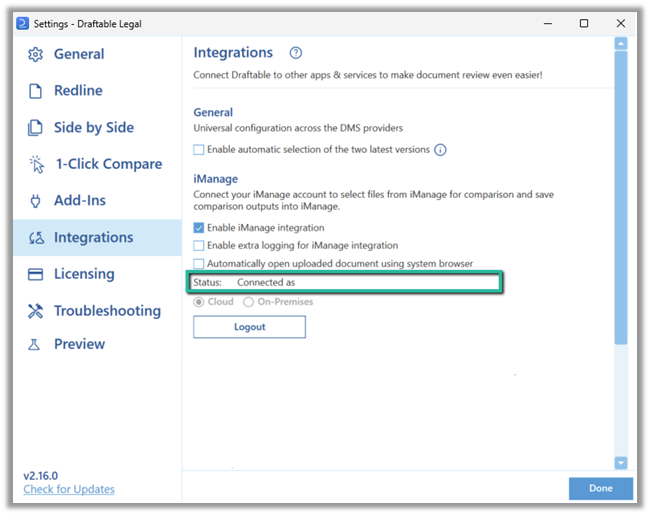
- 26.6 and later
- Before 26.6
In 26.6 the iManage settings live under DMS Connections (previously Integrations).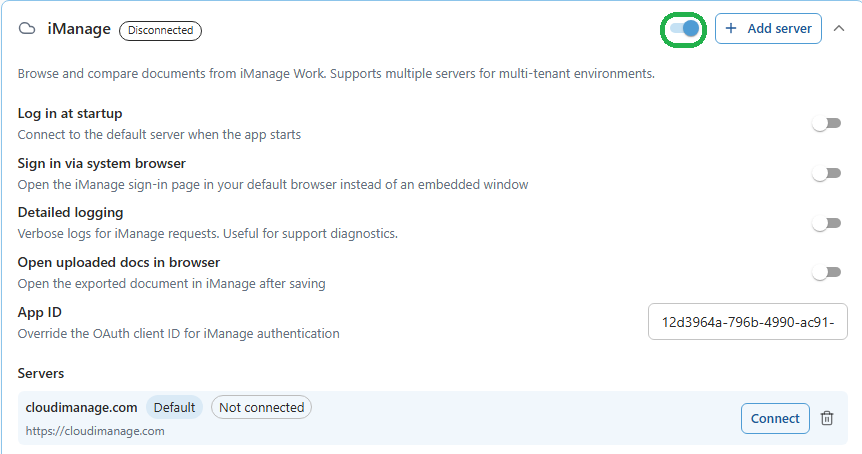
Before you can connect, you need to turn on the iManage integration. In the settings menu, select DMS Connections, find the iManage section, and switch on its enable toggle. The connection options and Servers list only appear once iManage is enabled.
1
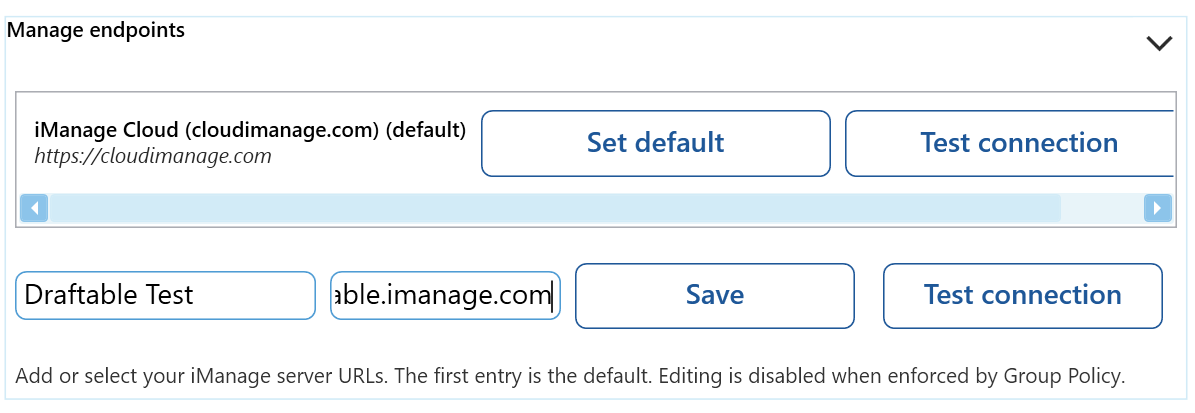
Open the settings menu, select DMS Connections, then expand the iManage section. Your iManage servers are listed at the bottom under Servers.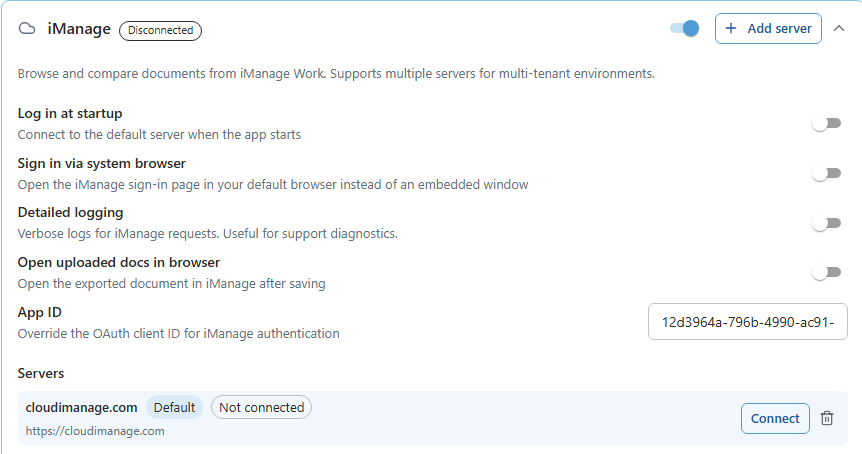
2
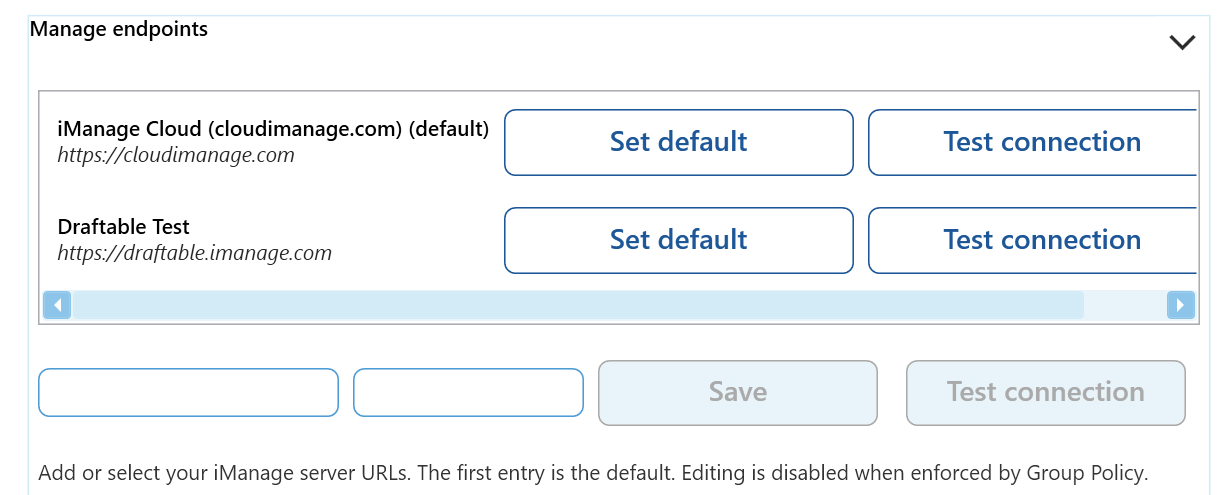
To add a server, click Add server. In the Add iManage Server dialog, enter your iManage Work server address in the Server URL field. For the default cloud configuration, enter:Then click Add Server.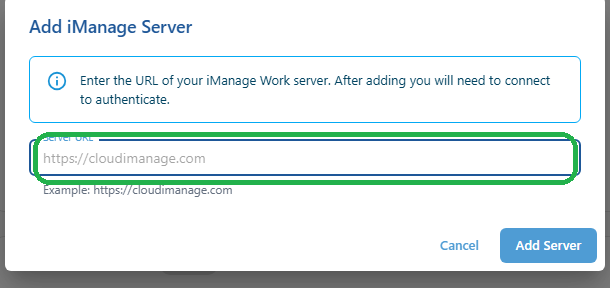
In 26.6 and later the dialog has a single Server URL field. There is no separate name field; the server name is taken from the URL.
3
The server is added to the Servers list. You can add more than one server if you work across multiple tenancies.
4
Find the server you want to use in the Servers list and click Connect, then enter your iManage credentials (unless they have already been configured by Group Policy).
5
The connection is validated when the iManage header shows a green Connected badge with your account, the server is marked Connected in the Servers list, and its Connect button changes to Disconnect.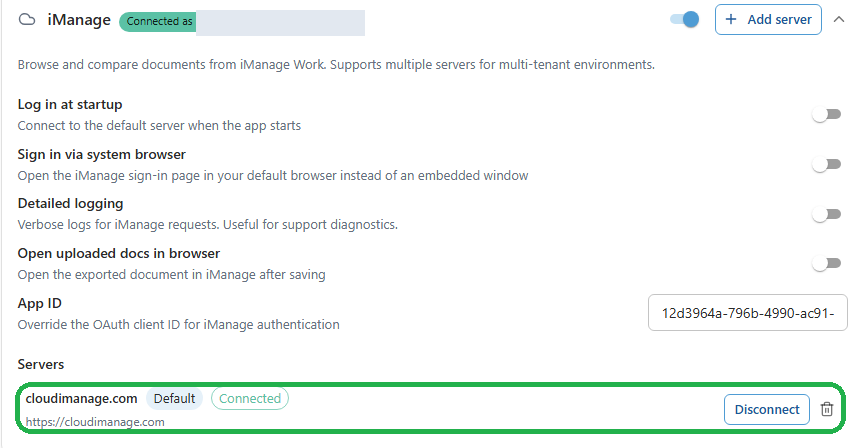


Configuring iManage cloud
We need to complete a few steps in order to correctly integrate Draftable Legal in iManage, and also setup the context menus to allow your users to compare with Draftable within iManage cloud. There are two parts to this: registering Draftable as an application in Control Center, and then adding the Draftable actions to the web client context menus. If you have already registered the application and only need the context menus, go straight to part 2.Part 1: Register Draftable as an application in Control Center
Part 1: Register Draftable as an application in Control Center
1
Login into iManage and navigate to control center.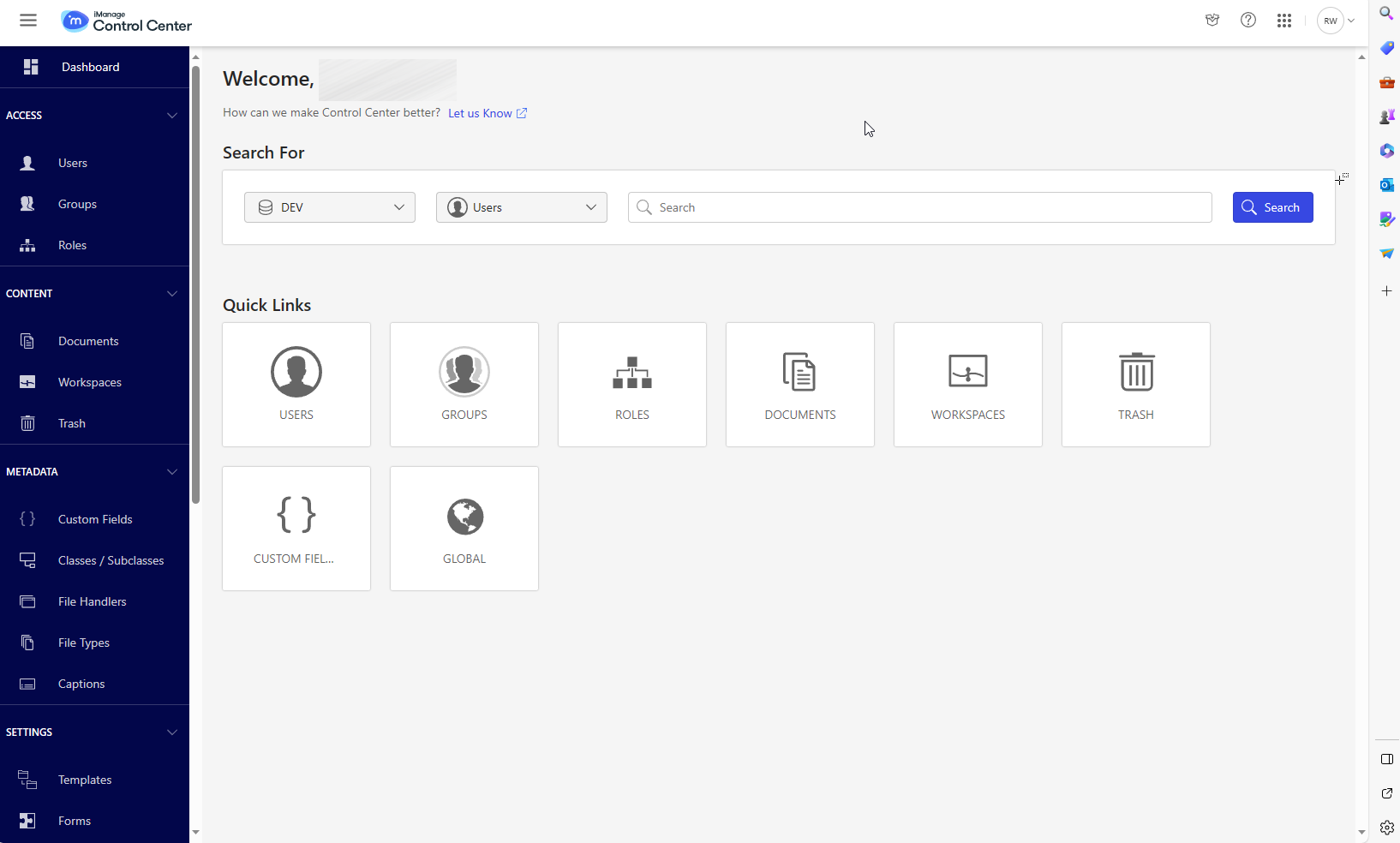
2
On the left hand menu bar, scroll until you see settings, then select applications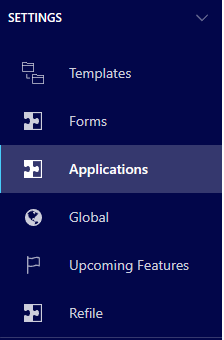
3
On the top right-hand side, select Add Application\
4
Search for Draftable, select the Draftable option, and then click Authentication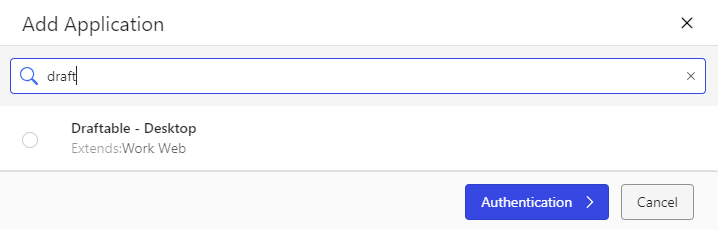
5
Now we configure the application, in the authentication section ensure we have the following settings configured:
Allow Refresh Token = Yes
Refresh Token Expiry = 365
Access Token Expiry = 30Once configured, select Access.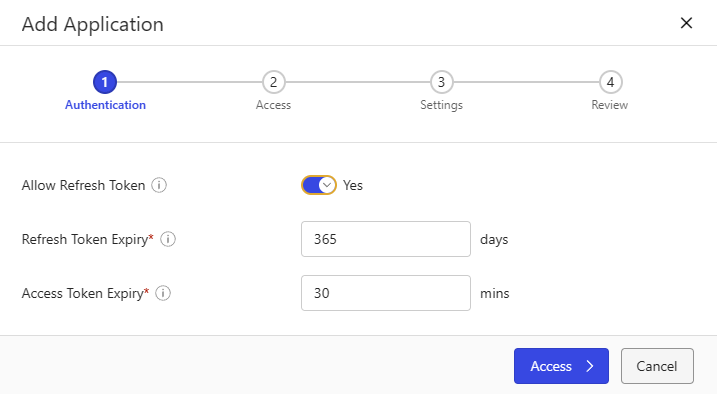
Allow Refresh Token = Yes
Refresh Token Expiry = 365
Access Token Expiry = 30Once configured, select Access.
6
In the “Access” window, ensure that Allow access to is set to All Users. Then click Review.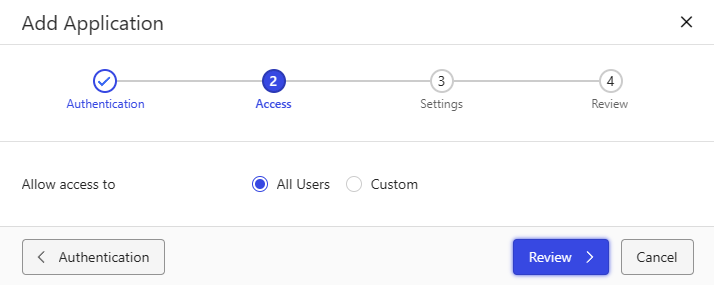
7
In the “Settings” window, ensure that the Draftable Communication Port is set to 4764. Then click Review.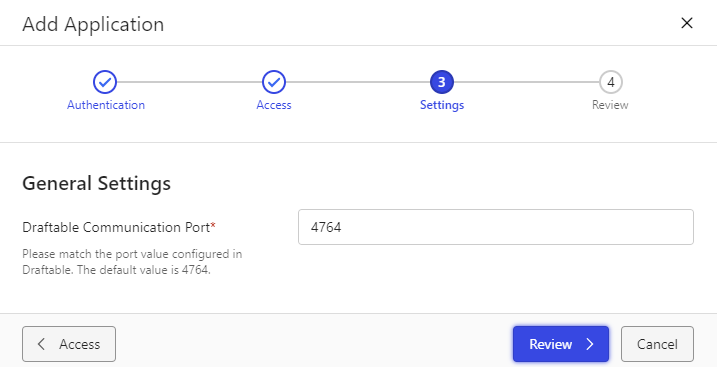
Note: You can set this to a different value, however, this will require you to change the value on the client end as well via group policy. If you wish to change the port value, set it here within iManage to your desired value and also set the group policy for the Draftable communication port. For the group policy information please refer to this article.
8
In the “Review” window, ensure that the information configured is correct, and then select Finish.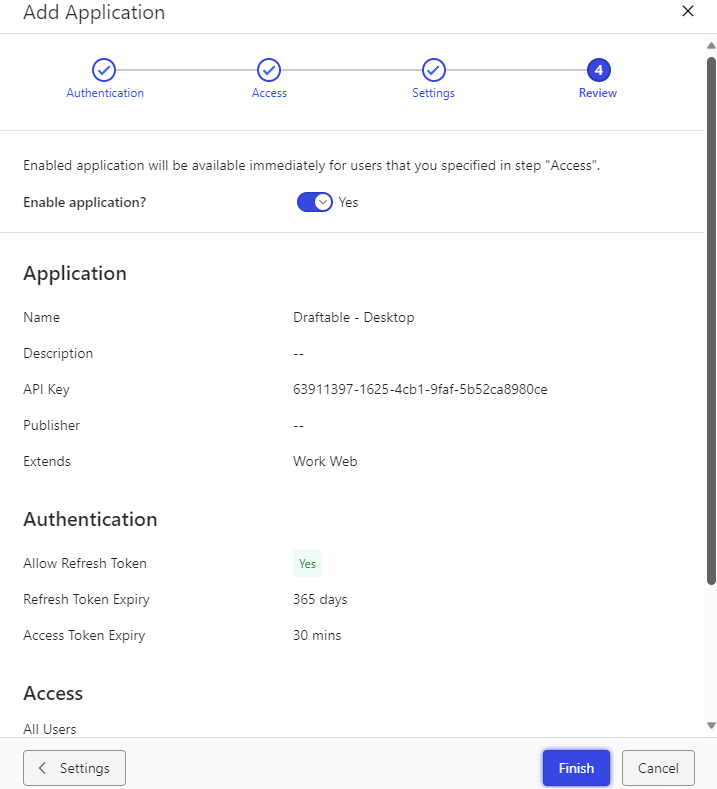
With the application registered, the Draftable actions now need to be added to the iManage web client context menus. Until this is done, your users will not see any Draftable options when they right-click a document.
1
In Control Center, on the left-hand menu bar, scroll until you see Work Clients, then select Web Client.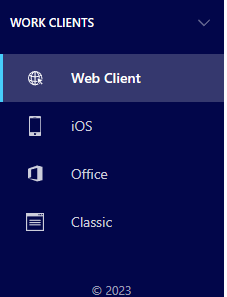
2
Within the web client section, select the context menus option to start editing the context menus.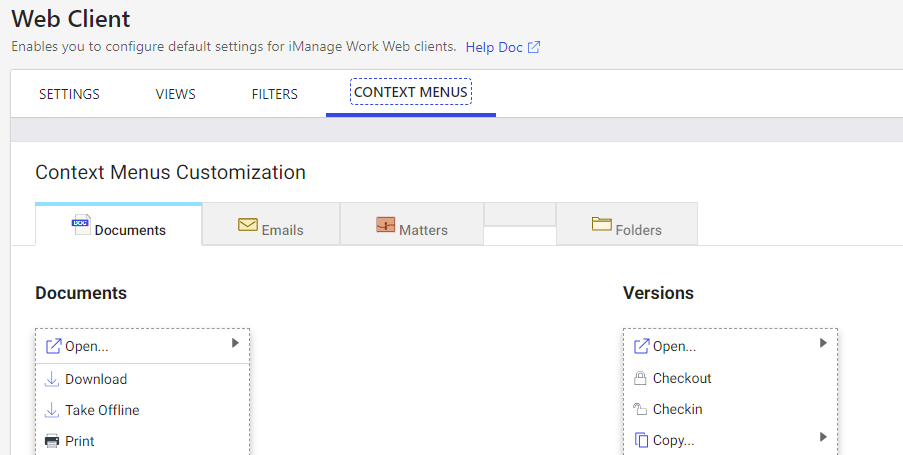
3
You will see two context menus, one for Documents, and another for Versions. We need to edit both in order to correctly configure. We will first configure Documents.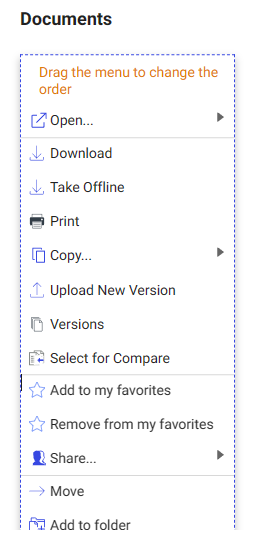
4
We first need to remove any options for Select for Compare, by clicking the X next to it. Do so before continuing to the next step.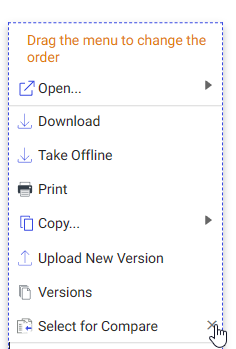
5
Now click on the menu itself so it highlights, and at the bottom of the menu select Add action.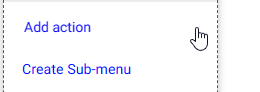
6
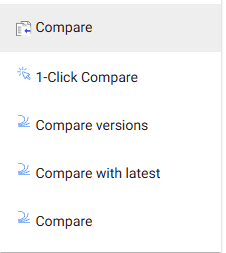
Select the Compare menu item, to add it to the menu. Repeat this for Compare Versions, 1-Click Compare and Compare with latest items as well.
!
7
Reorder the new menu option by selecting and dragging the Compare options to anywhere in your menu. See below for reference.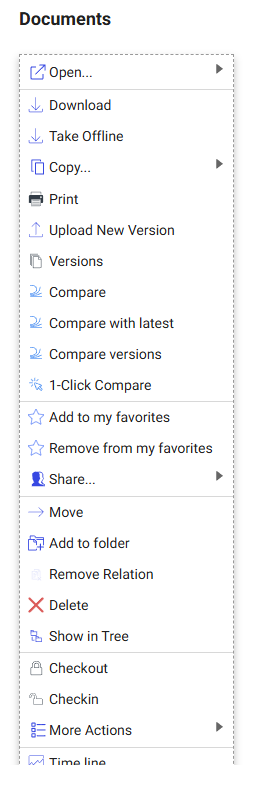
8
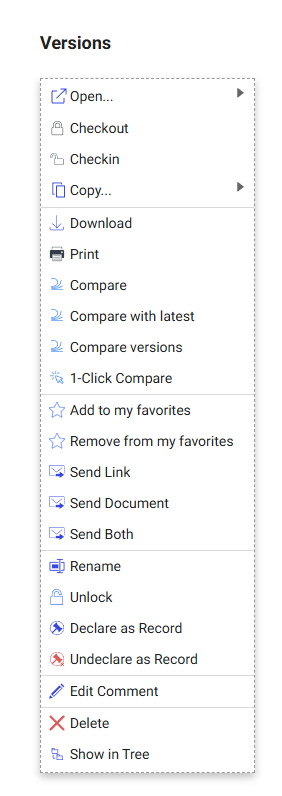
That completes the context menu for the Documents context menu. Repeat steps 3 to 7 above for the Versions context menu. You should see a result similar to below.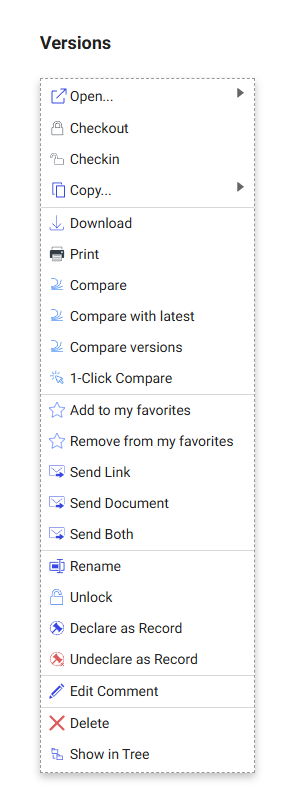
iManage On-Premise configuration
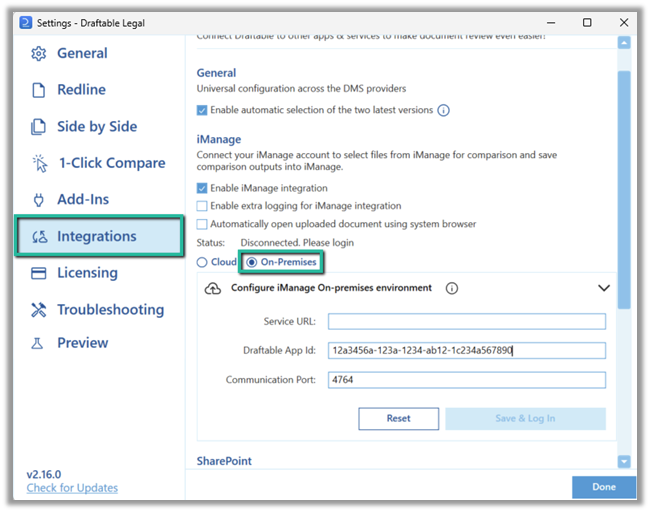
The iManage on-premise configuration requires access to both Draftable Legal and an administrator-level (with access to control center) account for configuring Draftable within iManage on-premise.Configuring Draftable Legal
- 26.6 and later
- Before 26.6
In 26.6 there is no separate On-Premises sub-tab. You add your on-premise iManage server the same way as a cloud server, under DMS Connections > iManage.Open the settings menu, select DMS Connections, expand the iManage section, and turn on its enable toggle if it is not already on. Click Add server and, in the Add iManage Server dialog, enter the Server URL of your on-premise iManage server, then click Add Server. Once the server is listed, click Connect and authenticate.
Configuring iManage on-premises
As with the cloud configuration there are two parts: uploading and registering the Draftable package in Control Center, and then adding the Draftable actions to the web client context menus. If you have already registered the package and only need the context menus, go straight to part 2.Part 1: Upload and register the Draftable package in Control Center
Part 1: Upload and register the Draftable package in Control Center
1
Login into your iManage On-Premise server, and navigate to control center.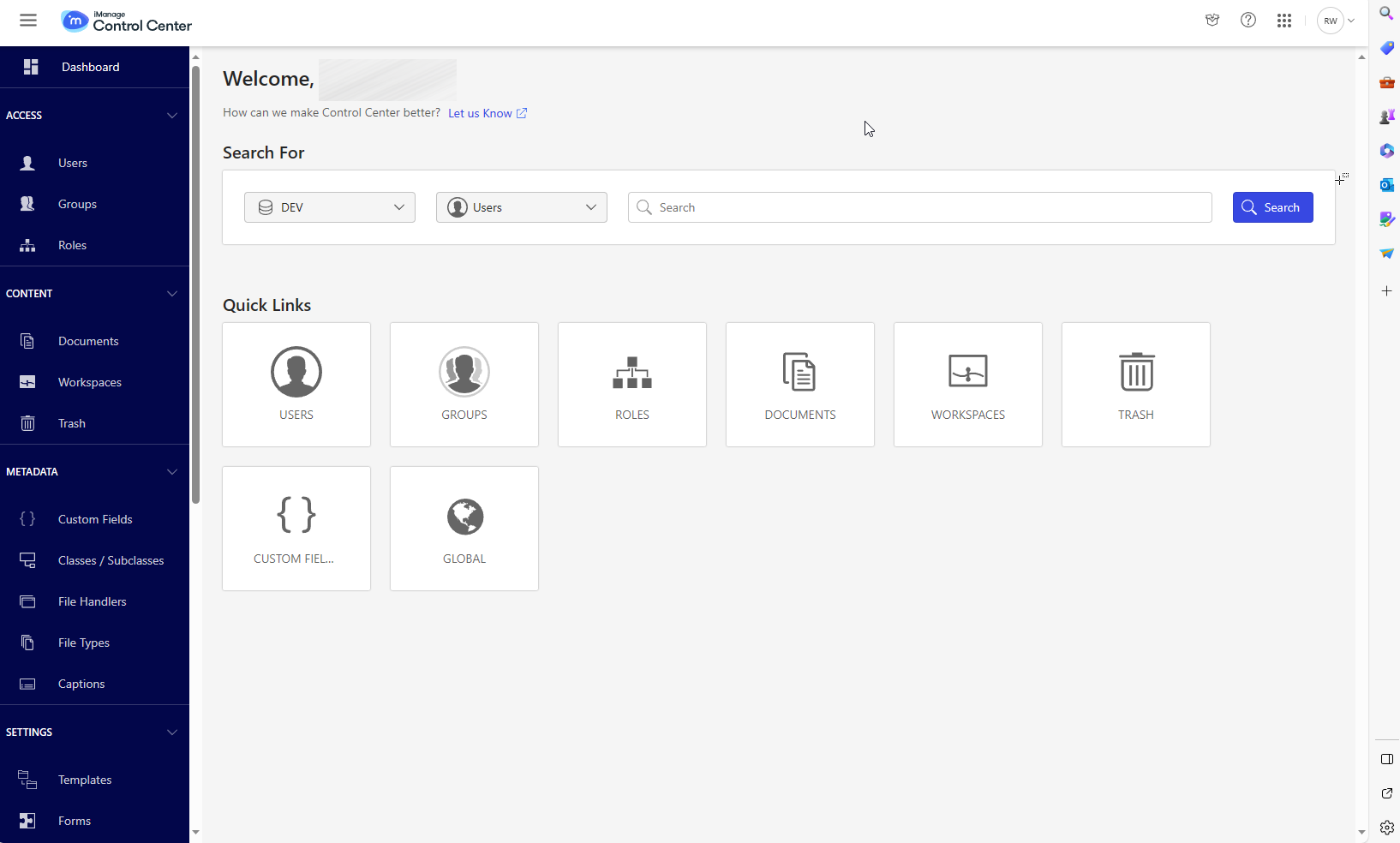
2
On the left hand menu bar, scroll until you see settings, then select applications.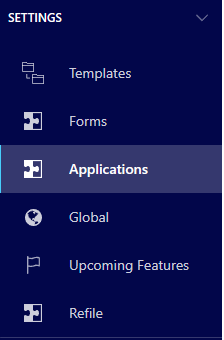
3
On the top right-hand side, select Add Application
4
The following window will appear. Draftable now allows you to upload a package file, so we will select Upload Package.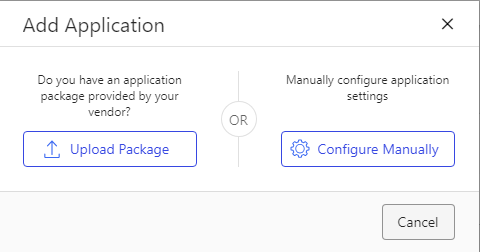
5
Navigate to the following location:Where 
<username> is the name of your account on the local machine, and Y.ZZ.XXX is the version number of Draftable, see below for an example.6
The following screen will appear. Since we added the package the information is prefilled. Click Authentication.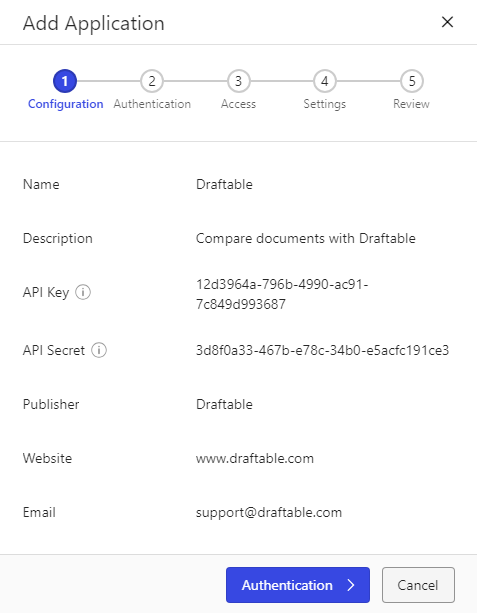
7
Again the information is prefilled, except for Allow Refresh Token, ensure this is ticked as Yes. Then click Access.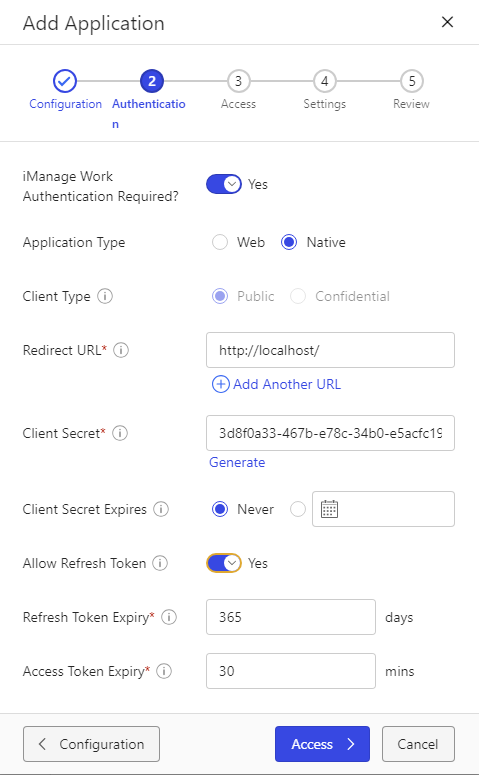
8
Again the information is prefilled, so just click Settings.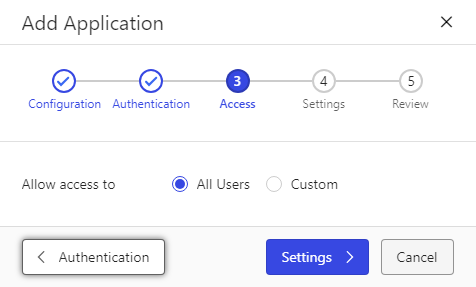
9
Again the information is prefilled, so just click Review.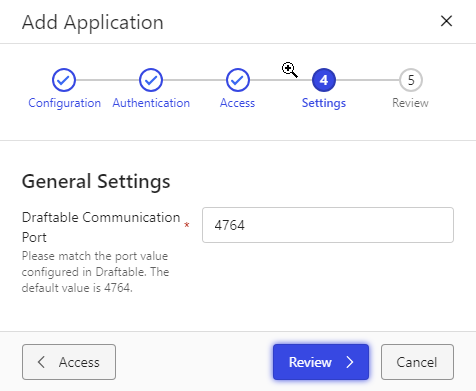
Note: You can set the Draftable Communication port to a different value, however, this will require you to change the value on the client end as well via group policy. If you wish to change the port value, set it here within iManage to your desired value and also set the group policy for the Draftable communication port. For the group policy information please refer to this article.
10
Review the information to ensure everything appears to look right and then click Finish.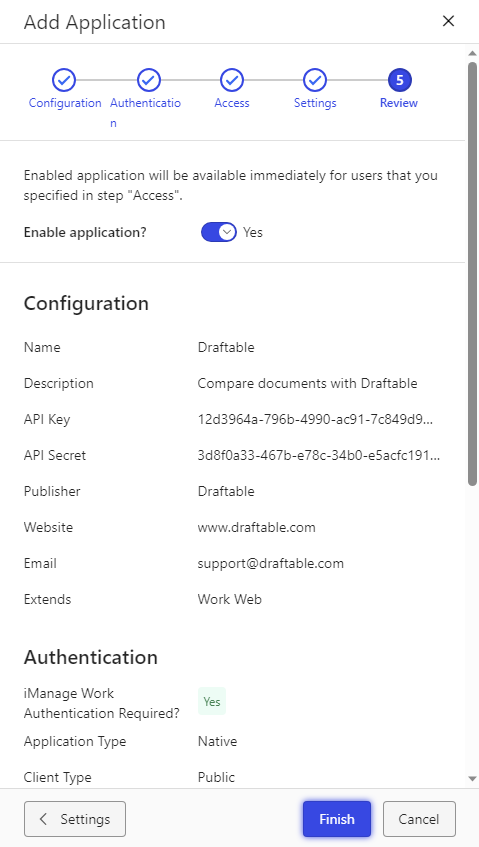
With the package registered, the Draftable actions now need to be added to the iManage web client context menus. Until this is done, your users will not see any Draftable options when they right-click a document.
1
In Control Center, on the left-hand menu bar, scroll until you see Work Clients, then select Web Client.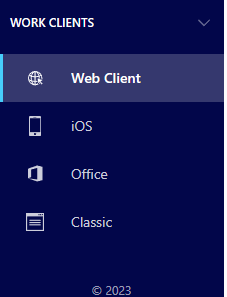
2
Within the web client section, select the context menus option to start editing the context menus.You will see two context menus, one for Documents, and another for Versions. We need to edit both in order to correctly configure. We will first configure Documents.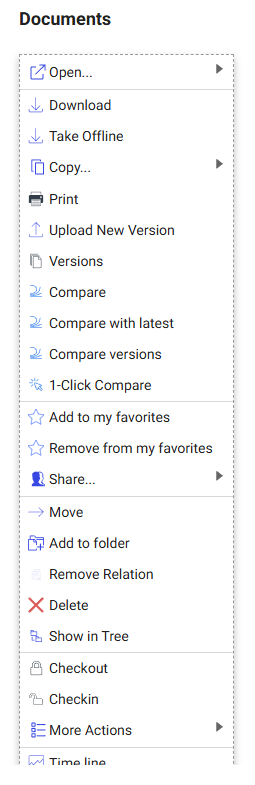
3
We first need to remove any options for Select for Compare, by clicking the X next to it. Do so before continuing to the next step.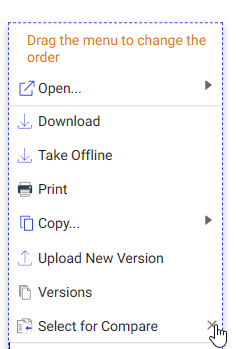
4
Now click on the menu itself so it highlights, and at the bottom of the menu select Add action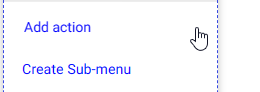
5
Select the Compare menu item, to add it to the menu. Repeat this for Compare Versions, 1-Click Compare and Compare with latest items as well.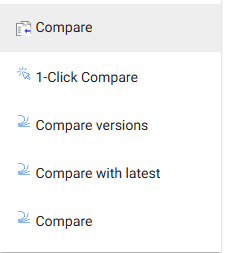
6
Reorder the new menu option by selecting and dragging the Compare options to anywhere in your menu. See below for reference.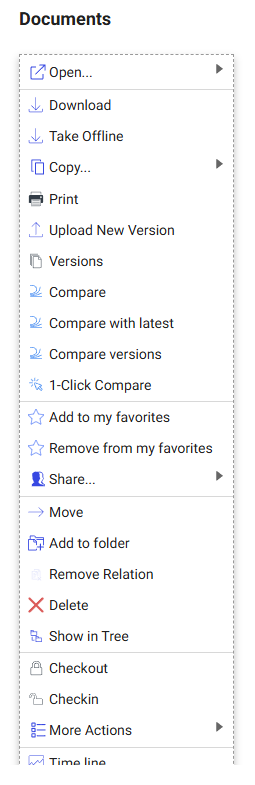
7
That completes the context menu for the Documents context menu. Repeat steps 2 to 6 above for the Versions context menu. You should see a result similar to below.